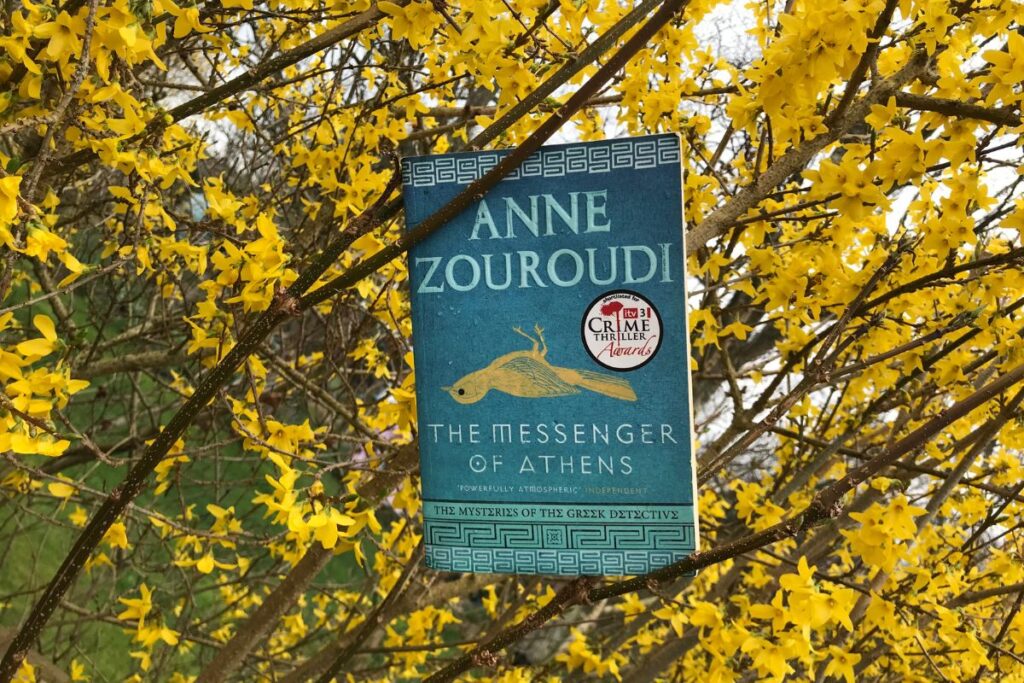
If you pick up The Messenger of Athens by Anne Zouroudi expecting a gentle Greek escape – think again. The prequel to The Mysteries of the Greek Detective series delivers something far darker. The opening pages quickly strip away any dream of sun‑drenched beaches and friendly locals. Instead, we’re led into the murky world of fictitious Thiminos.
A Greek island where suspicion thrives and tradition rules
Thiminos is small with only four settlements. Where residents hunker down during the off-season in damp houses battered by winter storms. Outsiders are viewed with suspicion. Locals who don’t conform are whispered about. Islanders cling to rigid expectations. Men want wives to run households. Women want husbands for babies. Love is optional. Fidelity a bonus. Here, your life is predestined. That’s the way it is.
A Mysterious Stranger Arrives
And into this world comes Hermes Diaktoros, known as The Fat Man. He arrives to investigate the death of Irini Asimakopoulos. The local police have already speedily dismissed the case as a suicide. Yet Diaktoros will not be waylaid. He meets resistance everywhere except from Irini’s uncle, who runs a small taverna. Everyone else seems determined to hide the truth and hinder his progress.
A Story Told in Two Timelines
Zouroudi skilfully moves between Diaktoros’s present‑day search for answers and events leading up to Irini’s death. This structure works extremely well. It gives us intimate access into Irini’s unfulfilled life of a younger wife of a local fisherman. She came to Thiminos to marry but as an outside has never quite belonged. And she will suffer the consequences.
A Rich, Atmospheric Read
The Messenger of Athens by Anne Zouroudi is wonderful. The language is vivid, textured and full of tension. Every chapter reveals further hypocrisy, cruelty and corruption. But Zouroudi never sensationalises these themes. Instead, she exposes them with quiet precision. It comes as no surprise to find The Mysteries of the Greek Detective series is based on the Seven Deadly Sins.
Diaktoros: An Enigma Worth Following
The Fat Man remains mysterious. His physical description reminded me of Peter Ustinov’s Hercule Poirot with their obsession with a neat appearance. And there the similarity ends. Poirot operated (for the most part) within the confines of the law, whereas Diaktoros states he answers to a far higher authority. This man will not think twice about dishing out his own unique brand of justice. He seeks retribution. This is not to say Diaktoros is unfeeling. He offers those in the wrong a chance to redeem themselves. And he senses vulnerability and aids those who are in need. This lends a mythic or spiritual edge to the story.
Final Thoughts
If you enjoy crime fiction with moral weight and atmospheric depth, this book deserves a place on your list. It’s a darker Greek island experience, rich with tension and humanity. But a love and longing for Greece shines through. And the ending? It might not be what you expect. But it’s extremely satisfying.
How interesting. My version is titled first in the series but a reedited version now exists entitled a prequel.